
Deck Safety Inspection — Complete Guide
Your deck might look fine from the patio door and still be one loose bolt away from failure. This guide walks you through a builder's deck inspection checklist so you can assess whether your existing deck is structurally sound before you pay anyone for an inspection or repair quote. We build, repair, and replace decks across Ontario, California and the wider Inland Empire, so we know exactly where local decks fail first. Below, you'll learn the warning signs of structural damage, how often to inspect, and what California code actually requires for railings and guardrails. By the end, you'll know whether your deck is safe to use or a hazard that needs professional attention.
What You'll Find in This Guide
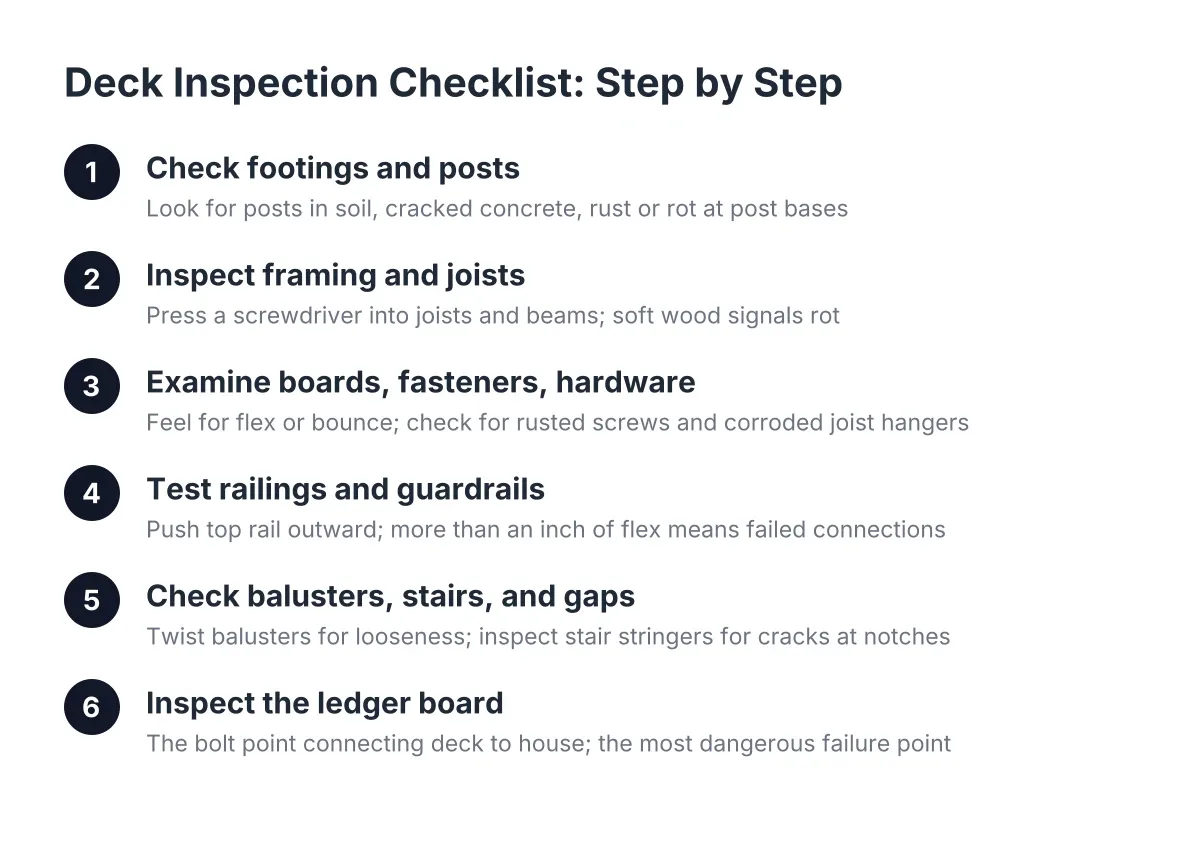
What to Look for: A Deck Inspection Checklist Guide for Six Warning Signs of Structural Damage
You don't need special tools to run a basic deck inspection checklist. In fact, most of the serious problems we find on decks in Ontario, California show themselves to anyone who knows where to look. Grab a screwdriver and a flashlight, then check these six areas.
Soft or Spongy Deck Boards
Press the tip of a screwdriver into any board that looks discolored, cupped, or cracked. If the tip sinks in easily, that's rot. One soft board is a repair. However, a cluster of soft boards, especially near the house or around posts, usually means moisture has been sitting in the structure for years. That's when surface symptoms point to framing problems underneath.
Wobbly or Loose Railings
Grab the railing and push hard, the way a guest leaning against it would. It should not move at all. A railing that flexes or rocks at the posts is one of the most dangerous defects a deck can have, because railings fail exactly when someone puts weight on them. Beyond that, check that balusters are secure and spaced no more than four inches apart.
Rusted or Missing Hardware
Look underneath the deck at the joist hangers, bolts, and connectors. Surface rust is common in Southern California decks, but flaking, deep corrosion, or missing fasteners are serious. Hardware holds your deck together. When it fails, the wood around it often looks fine right up until the connection lets go.
Ledger Board Problems
The ledger board attaches your deck to the house, and ledger failure causes a large share of full deck collapses. As a result, this is the single most important check on the list. Look for gaps between the ledger and the house, water staining, missing flashing, or a ledger fastened with nails instead of lag bolts or structural screws. Any of these signs means stop using the deck and get a professional assessment.
Cracked or Leaning Posts
Sight down each support post. It should be plumb, solid at the base, and free of large vertical cracks. Additionally, check where posts meet the ground or footing. Posts buried in soil or sitting in standing water rot from the bottom up, where you can't see it.
Movement Underfoot
Finally, walk the deck and pay attention. Bouncing, swaying, or visible sagging means the framing is undersized, damaged, or both. A sound deck feels like a floor, not a trampoline.
How Often to Use Your Deck Inspection Checklist in the Inland Empire
The short answer: run through your deck inspection checklist once a year, ideally in spring before heavy outdoor season starts. That said, the right frequency depends heavily on the age and history of your deck.
Why Deck Age Matters More Than It Looks
According to the North American Deck and Railing Association (NADRA), an estimated 50 percent of the roughly 50 million residential and commercial decks in the U.S. are more than 25 years old. NADRA also estimates that of the more than 60 million total decks nationwide, roughly 30 million are past their useful life and need repair or replacement. In other words, if your deck came with the house and you're not sure when it was built, there's a real chance it's operating on borrowed time.
The stakes are not theoretical. A study using CPSC injury surveillance data found 224,000 people nationally were injured due to a deck or porch over the study's five-year period, with 33,000 of those injuries resulting from structural failure or collapse, according to Legacy Services LLC. Most of those failures gave warning signs first. Someone just had to look.
What Inland Empire Conditions Do to Decks
Homeowners in Ontario, Rancho Cucamonga, Fontana, and Upland sometimes assume our dry San Bernardino County climate protects their decks. It helps with rot, but it creates its own problems. Intense UV exposure dries out wood fibers, opens checking cracks, and degrades sealants faster than in milder climates. Meanwhile, the temperature swings between summer heat and cool nights work fasteners loose over time. Then winter rains arrive and find every unsealed crack.
For that reason, we recommend Inland Empire homeowners inspect annually and reseal or restain on schedule. Additionally, inspect after any unusual event: a heavy storm season, a large gathering on the deck, or an earthquake strong enough to feel. If you're selling your home, inspect before you list. Buyers' inspectors will flag deck defects, and a surprise repair demand during escrow costs far more leverage than a proactive fix.
If your self-check turns up problems and you want a professional opinion, our guide to deck safety inspection costs explains what to expect to pay and what affects the price.
California Railing Codes and When to Call a Professional
A visual once-over tells you a lot. However, some deck safety questions come down to code compliance, and code is where many older Inland Empire decks quietly fail.
Guardrail Height Requirements in California
The California Building Code requires a minimum guardrail height of 42 inches for most residential deck applications above 30 inches in height, according to the California Building Standards Commission. That's stricter than the 36-inch minimum many older decks were built to, and stricter than codes in some other states. Consequently, a deck that passed inspection in 1998 may fall short of today's standard. Measure from the deck surface to the top of the rail. If your elevated deck has a 36-inch railing, it may be legal as existing construction, but it doesn't meet the current safety bar. Anyone replacing that railing today must build to the 42-inch requirement. You can review the current code language through the California Building Standards Commission.
Other Code Items Worth Checking
Beyond railing height, look at baluster spacing (no gap should pass a 4-inch sphere), stair rise and run consistency, and graspable handrails on stairs with four or more risers. Additionally, check for proper flashing at the ledger. Missing flashing fails both code and common sense, since it lets water run straight into the connection that holds your deck to the house.
When Self-Diagnosis Isn't Enough
A homeowner's visual inspection catches most visible problems. Still, some issues hide from even a careful eye: rot inside beams, corroded fasteners buried in framing, footings that have shifted or sunk. Call a professional if you find any ledger board warning signs, if the deck moves underfoot, if posts show rot at the base, or if you're preparing a home for sale in Ontario, Corona, Riverside, or Chino and want documentation for buyers. A professional evaluation costs far less than the repair a hidden defect causes later, and our inspection cost guide breaks down exactly what that evaluation should run. If repairs turn into a rebuild, remember that permits factor into the budget too. HomeAdvisor reports a deck building permit typically costs between $230 and $500, depending on location.
Ready to Get Started?
If your walk-through turned up soft boards, a wobbly railing, or anything questionable at the ledger, don't wait for the problem to announce itself. We're an Inland Empire deck specialist based in Ontario, California, and we inspect, repair, and rebuild decks across San Bernardino and Riverside Counties every week. Reach out for an honest assessment, and we'll tell you straight whether your deck needs a repair, a rebuild, or nothing at all.