Deck Improvement Priorities: Upgrades That Help Sell Homes Fast in Ontario, CA
If you are listing a home in Ontario, California with an aging deck, you do not need a remodel. You need a deck improvement priorities list—a short inventory of upgrades that get the deck past inspection and looking good in listing photos, done in weeks rather than months. This article ranks eight fixes in the order Inland Empire sellers should tackle them, starting with the safety items an inspector will flag and ending with the cosmetic touches that help a buyer picture themselves out back.
The list below is ordered by what matters most to a sale. Safety first, structure second, appearance third. If your timeline or budget runs out partway down the list, you will have spent money where it counts.
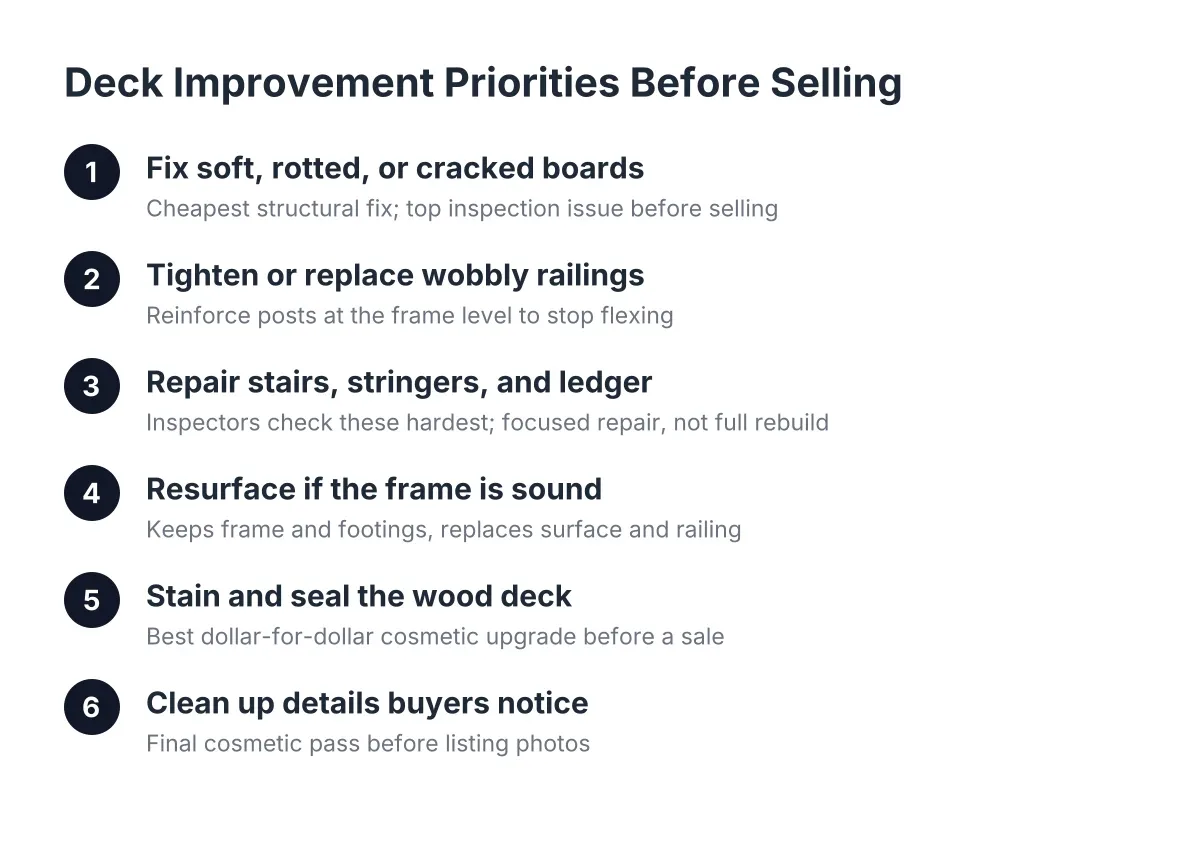
1. Fix Soft, Rotted, or Cracked Deck Boards First
Replace any board that feels spongy underfoot, shows visible rot, or has splits deep enough to catch a bare foot. This is the number one deck inspection issue before selling, and it is also the cheapest structural fix on the list; a crew swaps individual boards without touching the frame.
Buyers walking an open house will step on that soft spot near the stairs, and so will the inspector. According to the North American Deck and Railing Association, about half of the roughly 50 million decks in the U.S. are more than 25 years old, so inspectors in San Bernardino County look at deck boards with a skeptical eye. Deck board replacement is usually a one- or two-day job for a local deck contractor, which fits a listing timeline.
Suppose a seller in Rancho Cucamonga has six soft boards on a 300-square-foot wood deck. In that scenario, targeted board replacement might run a few hundred to a couple thousand dollars depending on lumber and labor, as an illustrative estimate. Compare that with the cost of a buyer's inspector writing "deck surface unsafe" into the report.
2. Tighten or Replace Wobbly Railings
A railing that moves when someone leans on it is the fastest way to earn a safety flag in a pre-sale inspection. Deck railing repair ranges from re-fastening loose posts to installing new railing sections, and either option is quicker and cheaper than buyers assume.
Inspectors test railings by hand. If a post flexes, they note it, and in Southern California that note often turns into a repair credit request larger than the actual fix would have cost. A deck builder can usually reinforce posts at the frame level, which solves the wobble without replacing the whole railing run.
However, if the posts are rotted where they meet the frame, patching is throwing money at the problem. That is one of the spots where you want a straight repair-versus-replace answer from a deck contractor before you spend anything.
3. Repair Stairs, Stringers, and the Ledger Connection
Stairs and the ledger board, where an attached deck connects to the house, are the two places inspectors in the Inland Empire check hardest. Loose stair treads, cracked stringers, or a ledger fastened with nails instead of proper bolts are the issues most likely to kill a deal or trigger a renegotiation.
These are not cosmetic problems, and they are not DIY territory for most sellers. A ledger pulling away from the house is the most common cause of deck collapse, which is why it gets so much attention in an inspection report. The good news for a seller: reinforcing a ledger or rebuilding a stair run is a focused repair, not a full deck replacement.
In addition, dry Inland Empire summers followed by winter rain cycles can loosen fasteners over the years. Asking a local Ontario, CA deck contractor to re-check and upgrade connection hardware is an inexpensive line item that reads well in disclosures.
4. Resurface Instead of Replacing When the Frame Is Sound
Deck resurfacing means keeping the existing frame and footings and replacing only the walking surface and railing. For sellers, this is the highest-impact middle option: the deck looks new in photos, but you skip the cost and lead time of full deck construction.
Resurfacing only works when the joists, beams, and posts underneath are solid. A deck builder should probe the frame before quoting; if they quote resurfacing without crawling under the deck, get a second opinion. When the frame checks out, resurfacing a mid-size deck typically takes days, not weeks, which matters when your agent wants photos scheduled.
For example, say a homeowner in Fontana has a 20-year-old wood deck with a weathered gray surface but a dry, solid frame. Resurfacing with new boards and railing, as a hypothetical, could land in the low-to-mid four figures and transform the listing photos, while a full replacement of the same deck would cost multiples of that and push the listing back.
5. Stain and Seal a Structurally Sound Wood Deck
Deck staining and sealing is the best dollar-for-dollar cosmetic upgrade before a sale. A cleaned, stained wood deck photographs like a renovated outdoor living space, and the sealing protects the surface through showings and escrow.
The process is simple: wash the deck, let it dry fully, then apply stain and sealer. Inland Empire weather helps here; the dry climate in Ontario, Riverside, and Chino means short drying windows and fast turnaround for a staining crew. Most staining and sealing projects wrap in two or three days.
Therefore, if your deck passed items one through three above and the boards are solid, staining may be the only improvement you need. Do not stain over rot to hide it. Inspectors find it, and concealing a known defect creates disclosure problems that cost far more than the repair.
6. Prioritize Composite or Trex-Style Boards Only If You Are Resurfacing Anyway
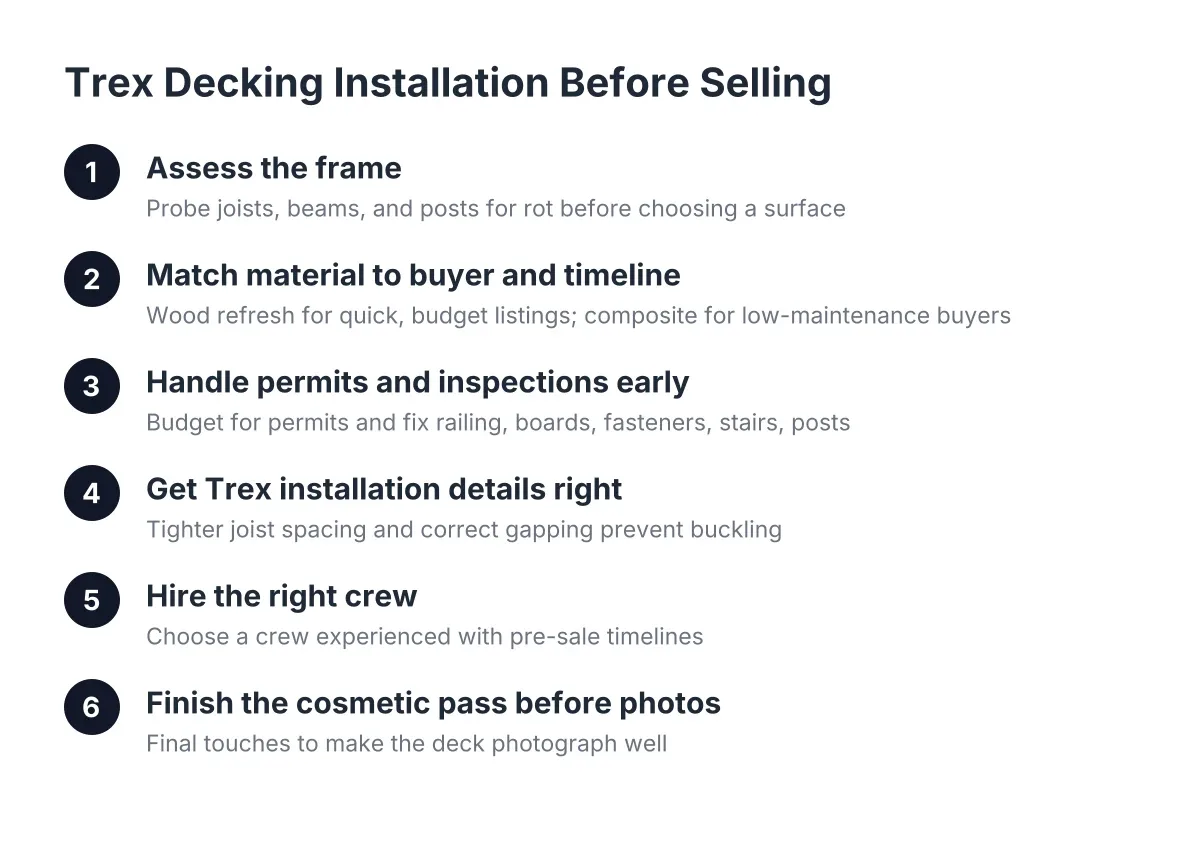
If resurfacing is already on your list, composite decking deserves a look because low-maintenance surfaces appeal to buyers. According to Grand View Research, capped composite decking and railing held a 57.8% product market share in 2025, which tells you where buyer preference sits. Trex deck contractors and other composite deck installers work from the same frame-first logic as a wood resurface.
That said, composite costs more per board than wood, and a seller moving in 60 days does not benefit from the 25-year lifespan the next owner enjoys. The honest trade-off: composite can be a selling point in a listing description, but a well-stained wood deck recovers cost at sale better than almost any other improvement. According to the National Association of Realtors' 2023 Remodeling Impact Report, homeowners recover 89% of the cost of a new wood deck through added home value.
As a result, most pre-sale sellers in the Inland Empire are better off with wood unless the listing competes directly with newer homes where composite decks are standard.
7. Clean Up the Details Buyers Actually Notice
Small cosmetic fixes punch above their weight in showings. None of these require permits, and a handy seller can knock out several in a weekend before the deck contractor arrives for the bigger items.
- Countersink or replace popped nails and screws across the deck surface
- Replace cracked or missing fascia boards along the deck edge
- Pressure-wash the surface, stairs, and railing, then let everything dry before photos
- Re-secure loose post caps and trim pieces
- Clear planters, hoses, and clutter so the full deck footprint shows in photos
These deck curb appeal tips matter because buyers judge maintenance habits from details. A deck with popped nails and green buildup signals deferred maintenance on the whole house, fair or not.
8. Get Permits Squared Away Before the Buyer's Agent Asks
Unpermitted deck work surfaces during escrow in San Bernardino County and Riverside County, and it surfaces at the worst time. If a previous owner built or modified the deck without permits, address it before listing rather than during negotiations.
For most repair-level work, no permit is needed. Structural changes, new footings, or elevated deck construction typically do trigger permit requirements. According to HomeAdvisor, a deck building permit typically costs between $230 and $500 depending on location, which is a small price for a clean escrow. A local deck builder who handles deck permits and planning in Ontario, CA can tell you quickly whether your situation needs one.
How to Rank Your Deck Improvement Priorities and Upgrades on a Listing Timeline
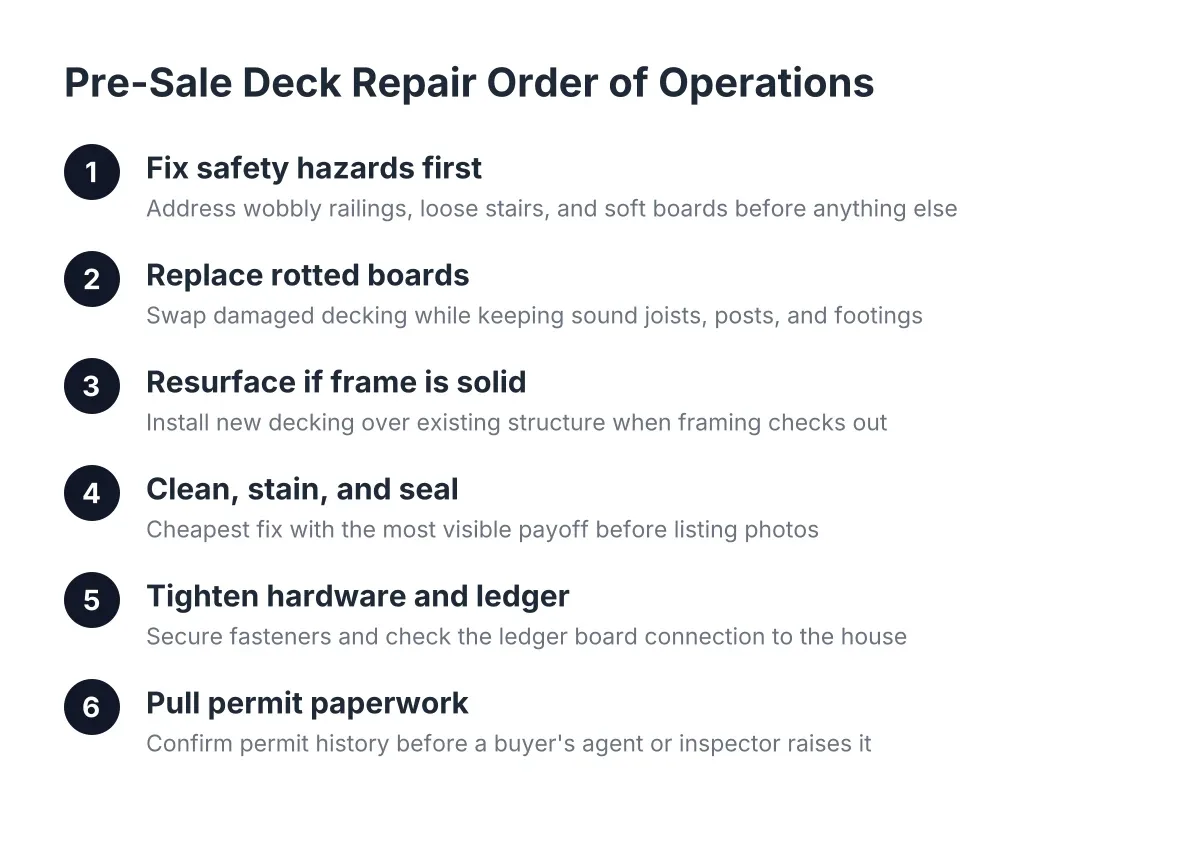
Rank deck work for a home sale in three tiers: safety repairs first, structural soundness second, cosmetics last. Fix soft boards, loose railings, and stair or ledger problems before spending anything on appearance, because inspectors flag safety items and buyers negotiate off those flags. Spend on staining or resurfacing only after the deck is sound.
A practical way to sequence it with 2026 listing timelines in mind:
- Weeks 1 and 2: safety repairs, boards, railings, stairs, and ledger hardware
- Week 3: resurfacing or targeted board replacement if the frame supports it
- Week 4: staining, sealing, pressure washing, and cosmetic details before photos
Most pre-sale deck improvements in the $2,000 to $8,000 range fit this schedule when the frame is sound. If an inspection has already flagged your deck, start at tier one and let the report guide the scope.
When the Right Answer Is Replacement, Not Repair
Sometimes the honest call is that the deck is past saving. Rotted framing, failing footings, or widespread structural decay means repair money disappears into a deck that still fails inspection. The North American Deck and Railing Association estimates 30 million U.S. decks are past their useful life, so this outcome is common, not a sales tactic.
A seller facing a full deck replacement has two legitimate paths: replace before listing, or price the home accordingly and disclose the condition. Which path wins depends on your market, your timeline, and your agent's read on local buyers; that judgment call belongs in a conversation with your listing agent and a deck contractor who has put eyes on the frame.
If you have gotten conflicting opinions, one person saying the deck is fine and another calling it a hazard, ask each to show you the specific framing members they based the call on. A trustworthy deck builder will crawl under the deck, point at the problem, and explain it in plain terms. Searching "deck builders near me" produces a long list in the Inland Empire; the useful filter is which one explains the why, not just the quote.
The Bottom Line for Ontario, CA Sellers
Deck improvement priorities for upgrades before a sale come down to one rule: spend on what the inspector and the buyer will actually see and test. Soft boards, loose railings, and shaky stairs cost deals. Fresh stain and clean details win photos. Everything else is optional on a listing timeline.
Start with a frame inspection from a local Ontario, California deck contractor, get a clear repair-versus-replace answer in writing, and work the tiers in order. Done that way, most sellers get an inspection-ready deck in a few weeks without paying for a remodel the next owner would have enjoyed more than they will.
If you need custom deck design, Inland Empire Decks can help.
Prefer to talk it through? Call (909) 298-8578 — a quick call is usually the fastest way to get a straight answer for your situation.